It’s Time You Knew
The entity that owns your health information owns your health.

There’s commonly a disconnect when you receive medical care in the US: the people are well-intentioned, thoughtful, and skilled, yet you walk out usually feeling unheard, unsupported in your health goals, and perhaps confused.
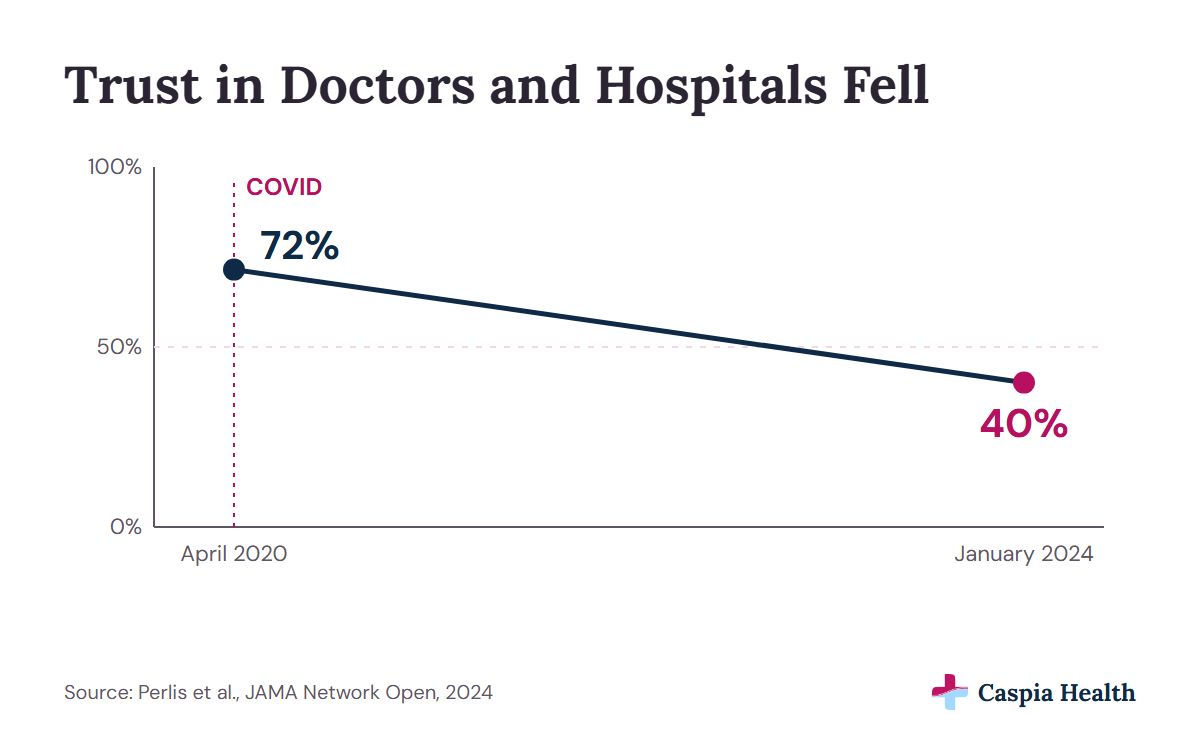
In any industry, the system is determined by the payment structure, and healthcare is no exception. Unfortunately, in healthcare, that payment structure incentivizes sick care instead of healthcare. When care feels shaped by billing rather than by you, it is hard to trust the advice that comes with it. Many have experienced this firsthand and have even become dangerously distrustful of their medical advice.
Unlike other industries, where competing for your business pushes companies to improve what customers care about, health systems have levers they can pull to keep you coming back without improving the service. The biggest of these levers is locking down your data: The entity that owns your health information owns your health.
Switching where you receive your medical care is extremely challenging. The technical challenges aside, there are administrative roadblocks and built-in delays that are not conducive to continuity of care, and they are enough to keep people from shopping around for better care at a better price.
Practical Realities of ‘Accessing’ Data
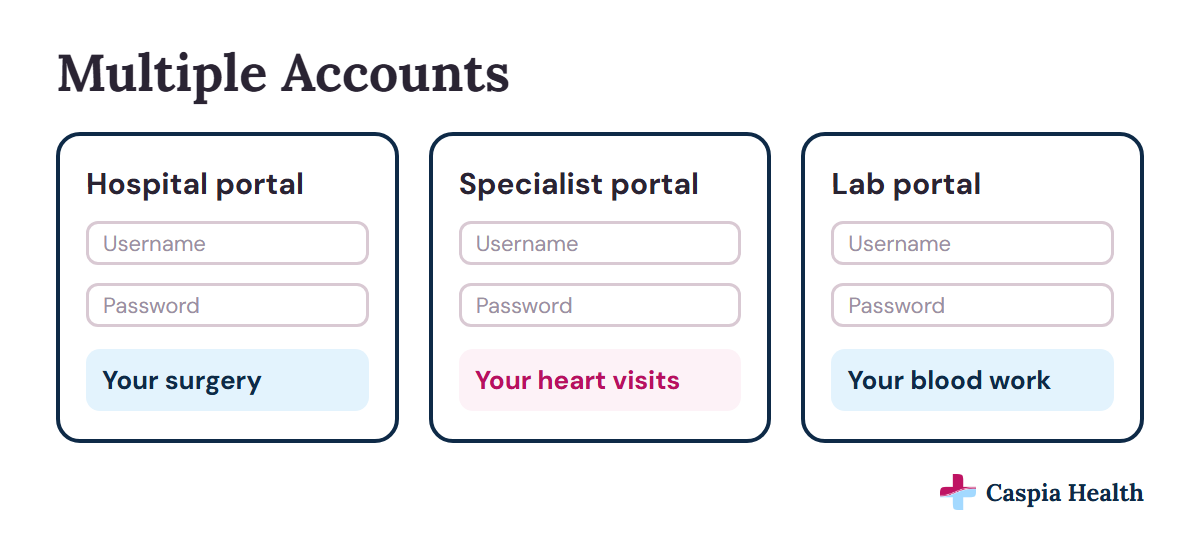
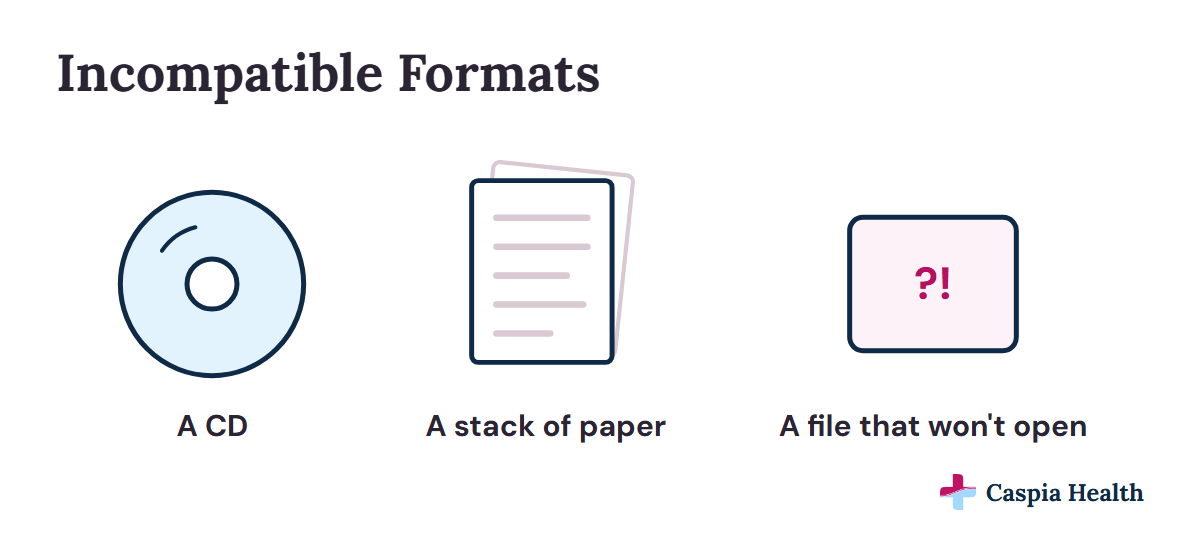
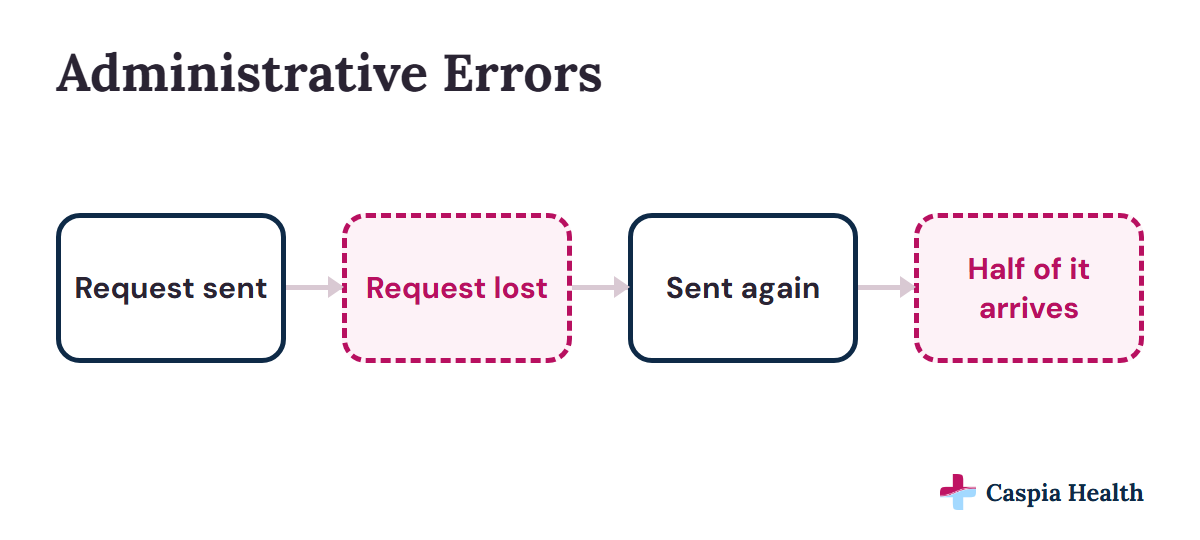
In fact, you have a right to all your health information, at little or no cost. But having the right does not make it easy. Multiple accounts, incompatible formats, and frequent administrative errors can make that ‘access’ extremely challenging.
Multiple accounts: Imagine you only saw half of all the text messages you received. Your responses would consistently be a little off. The same can happen with your health information, with much more consequential decisions at stake.
Incompatible formats: Imaging often comes on CDs, which many people have no way to load. Even when the CD is just handed off to a new imaging center for reference, the center sometimes can’t load the images either. Paper records can also be burdensome in their own ways. Many of the papers received are filler papers with unimportant information, making it challenging for a person to interpret their health information.
Administrative errors: Lost retrieval requests and incomplete fulfillments are just two of the common experiences people have when retrieving records.
When your history is difficult to move, seeking another opinion or changing providers becomes a daunting task. You may stay with a service that isn’t meeting your needs because leaving feels harder.
That dependence can reduce the pressure to improve care, even without anyone intending it. When you own your health information, you have more control over your healthcare options. Now, you can choose your care based on quality, cost, and how well it meets your needs. That freedom can create more pressure for organizations to compete for your business.
See this blog post on 10 ways to retrieve your medical data.
AI Can Read It. Can You Trust It?
Having your records is not the same as owning your health. One still must translate, interpret, and gain insights from them. Having usable access to your health information gives you more ability to bring your own priorities into the conversation.
Nowadays, people are very comfortable dumping as much information as they have into AI and asking for a reading. Almost like magic, what was not able to be parsed before now gains interpretability. But AI can also be unintentionally directed to give biased interpretations. Sometimes just informing the AI of your priorities makes it biased. For example, a common health goal my patients tell me is to come off their meds. Putting that into an AI without the proper guardrails could trigger advice to come off one’s meds.
AI is an important part of the picture, but it should not be trusted blindly. Built-in, tested protocols around information extraction, provenance, and safety guardrails are important for any AI in the healthcare space.
Your Records Aren’t Your Whole Health
Medical records are an important part of the picture, but not the whole picture. Medical records themselves are designed to support interprofessional communication, billing, and reporting. Information that does not fit standard diagnosis codes can be harder to capture consistently, and yet that is where much of your health is happening. Your health extends beyond any care delivery systems. It includes what happens between visits too: what you eat, how you sleep, how you move, and what you notice about your body, cognition, and emotions. And health records are not designed to capture your health goals, beliefs, and preferences for how you would like to be treated.
Building Around the Person
We are building toward a way to bring that picture together, with your permission, through portal connections, documents, wearables, and information you choose to capture, such as a dictated observation or a photo of a meal.
A personal health agent can help organize that information, explain unfamiliar language, and prepare questions or summaries for your care team. The goal is to help you understand what matters and decide what to discuss or do next, with important interpretations grounded in the records and appropriate clinical judgment.
Our incentives deserve the same scrutiny. You should understand how a service makes money (we never sell your data), what happens to your information (we store it securely and safely), and whether you can take it elsewhere (yes! through multiple avenues).
We call this health agency: having the information, understanding, and practical ability to participate in decisions about your health. The people caring for you may be skilled and well-intentioned, but they still work within systems shaped by payment. You live with the consequences.
Owning your data helps you own your story, and thus, own your health. Own your health with Caspia Health.
Sources
- Perlis RH et al., "Trust in Physicians and Hospitals During the COVID-19 Pandemic in a 50-State Survey of US Adults," JAMA Network Open 2024. https://jamanetwork.com/journals/jamanetworkopen/fullarticle/10.1001/jamanetworkopen.2024.24984